
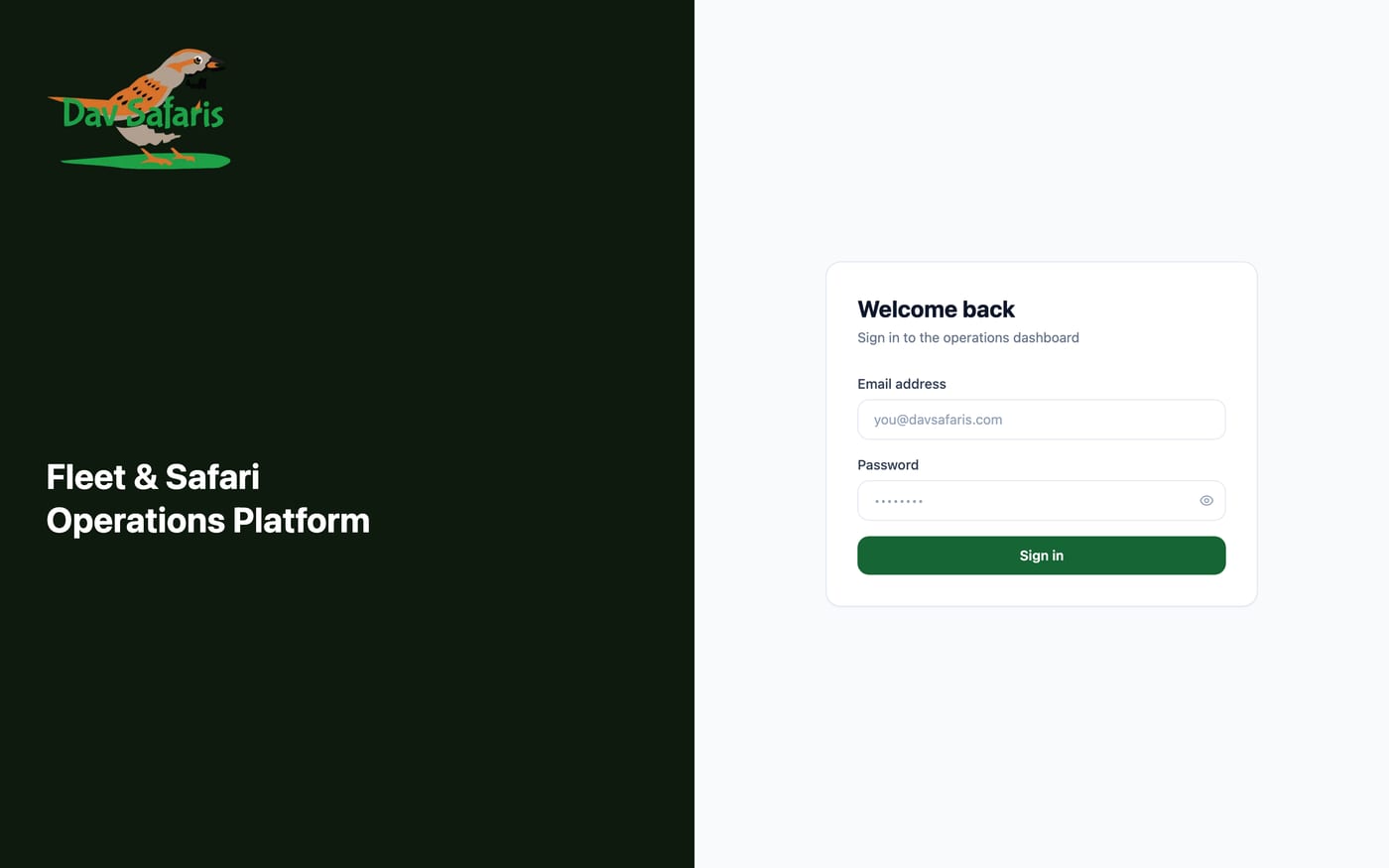
A tour operator runs on its fleet. Davsafaris were tracking vehicles, drivers, bookings, inspections and client messages across separate tools, so the answer to “where is that vehicle and who is on it” lived in several places at once.
The problem
Fleet operations are not one workflow. Dispatch assigns a driver and a vehicle. Maintenance takes vehicles out of service. Inspections decide whether a vehicle can go out at all. Clients ask where their transport is. The gaps between those were where things went wrong.
What I built
One operational surface covering the whole loop.
- Vehicle tracking, so fleet position and status is readable at a glance.
- Booking assignment that matches client, driver and vehicle, and flags conflicts before they are committed.
- Inspection records that gate whether a vehicle can be assigned.
- Maintenance scheduling, so a vehicle going out of service updates availability everywhere.
- Client and team messaging attached to the booking it concerns.
Making density readable
The hard part was not any one feature. It was that all of them share the screen. A vehicle is an asset, a maintenance record, an inspection status and part of a live booking at the same time.
The answer was repetition: the same colour, shape and position meaning the same thing on every screen. Operational tools earn trust by being predictable, not by being interesting.